


Polkadot Runtime Patch Lands Ahead of Supply Cap Activation - Block 30,349,908 Confirmed
Overview
Written on March 14, 2026. Polkadot's runtime was patched shortly before one of the network's most significant monetary changes was due to activate on-chain. The runtime v2.1.1 release, published on March 13, 2026, restored the enactment block for the supply-cap logic to block 30,349,908 so the runtime would align with the governance timeline.
The activation point has now been reached. According to the linked Subscan block explorer entry provided with this signal, block 30,349,908 was produced on March 14, 2026 at 03:23:54 UTC, marking the block where the supply-cap runtime logic took effect on-chain.
Context
The patch did not change the governance decision itself. Referendum 1710 had already passed through OpenGov and was marked executed on governance dashboards; the runtime release simply ensured that the code implementing the decision activated at the correct block rather than drifting earlier or later than intended.
The policy change behind that code path is substantial. Referendum 1710 introduces a maximum DOT supply of 2.1 billion and a stepped issuance schedule, moving Polkadot away from an open-ended inflation model toward a capped long-term monetary framework with declining issuance pressure over time.
Operational Impact
Operationally, the immediate effect for validators is light because node behavior does not materially change after the enactment block. The more important takeaway is architectural: Polkadot used a runtime patch to align on-chain implementation with governance intent, then activated a major monetary policy change without a disruptive network split.
Why the Runtime Adjustment Mattered
- Runtime upgrades on Polkadot activate at specific block heights and need to stay aligned with governance execution timing.
- If the enactment block drifts, the network can apply economic changes earlier or later than the governance process intended.
- The v2.1.1 patch served as a final alignment step so the supply-cap logic would enact exactly at block
30,349,908.
Activation on Chain
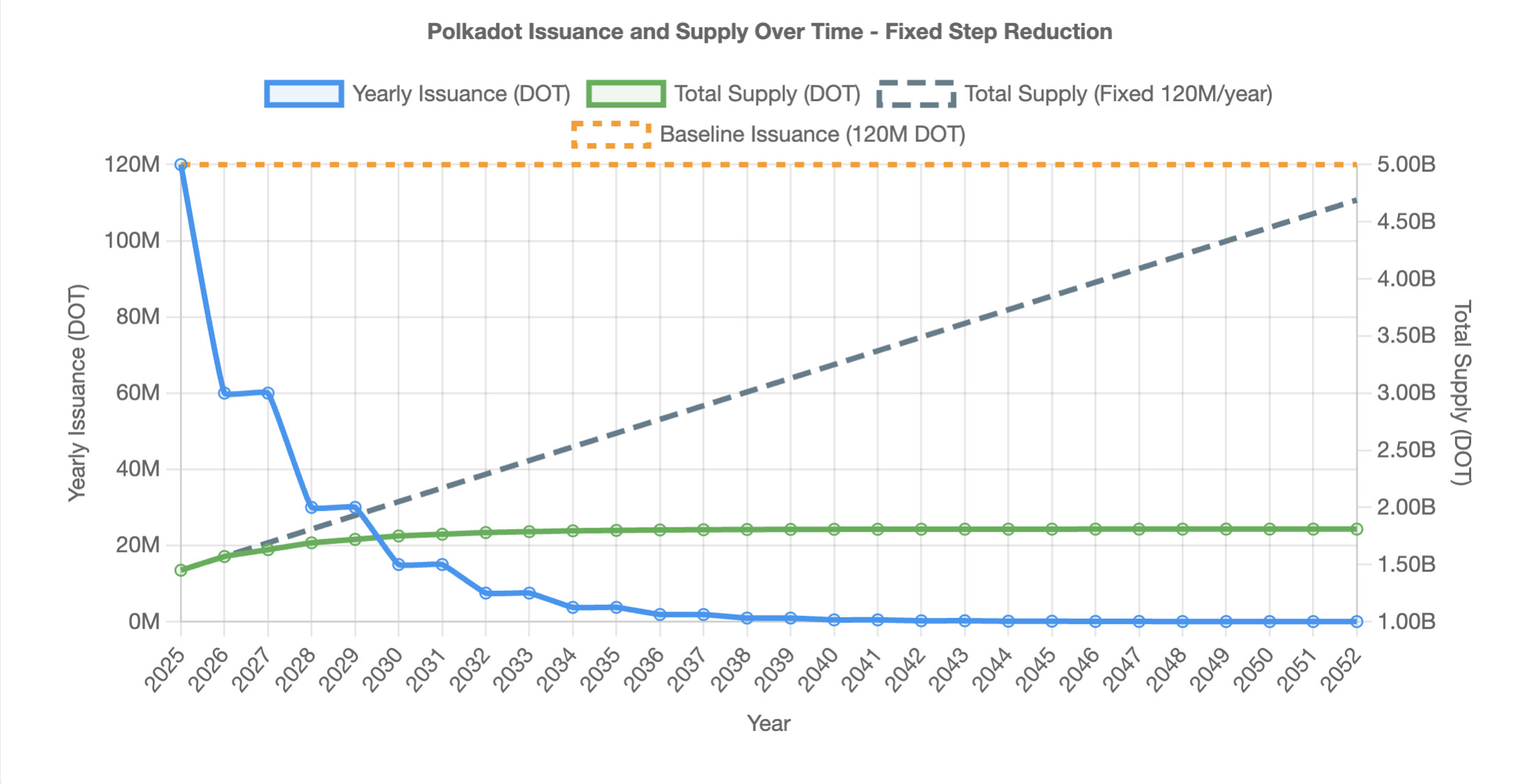
The linked block explorer entry for 30,349,908 is the clearest public confirmation that the runtime alignment took effect on-chain. In practical terms, this marks the block where the protocol entered the new monetary framework defined by Referendum 1710.
Context: Polkadot's New Monetary Model
- Referendum 1710 introduces a maximum supply of
2.1B DOT. - Issuance shifts from open-ended inflation toward a stepped reduction schedule over time.
- Validator rewards and treasury funding will now evolve under a capped monetary framework rather than perpetual uncapped issuance.
Sources
- Runtime v2.1.1 restored the enactment block for the supply-cap logic to block 30,349,908.
- The activation block is now confirmed: the linked Subscan entry shows block 30,349,908 on March 14, 2026 at 03:23:54 UTC.
- Referendum 1710 remains the governing policy change, introducing a 2.1 billion DOT maximum supply and stepped issuance schedule.
- The patch aligned runtime execution with governance timing rather than changing the underlying economic decision.